Athlete Management Systems have become increasingly common across professional, college, high school, and private sports performance programs.
But does every organization actually need one?
Probably not.
If your current process works, coaches can easily access the information they need, and your staff isn’t spending hours moving data between systems and spreadsheets, adding another piece of software may not solve anything.
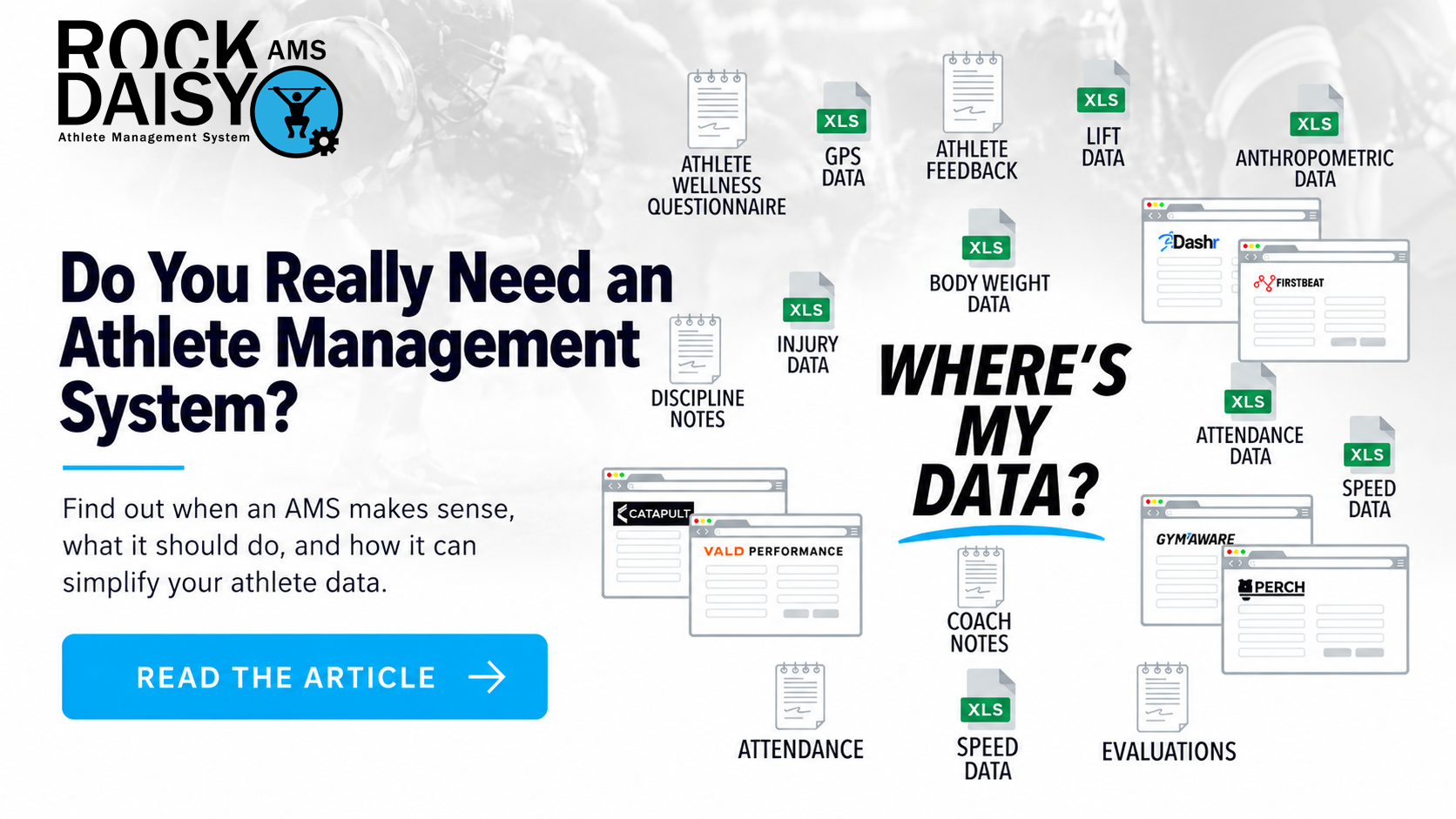
The better question is: Has managing all of your athlete data become harder than actually using it?
If the answer is yes, an Athlete Management System may be worth considering.
What Is an Athlete Management System?
An Athlete Management System (AMS) is software that helps sports organizations centralize athlete information, performance data, testing results, training data, attendance, wellness information, and other data collected across a program.
Instead of requiring coaches and performance staff to access multiple platforms and spreadsheets, an AMS can bring that information together in one place for reporting, analysis, and decision-making.
The goal isn’t simply to collect more data. It’s to make the data you’re already collecting easier to use.
Why Athlete Data Becomes Difficult to Manage
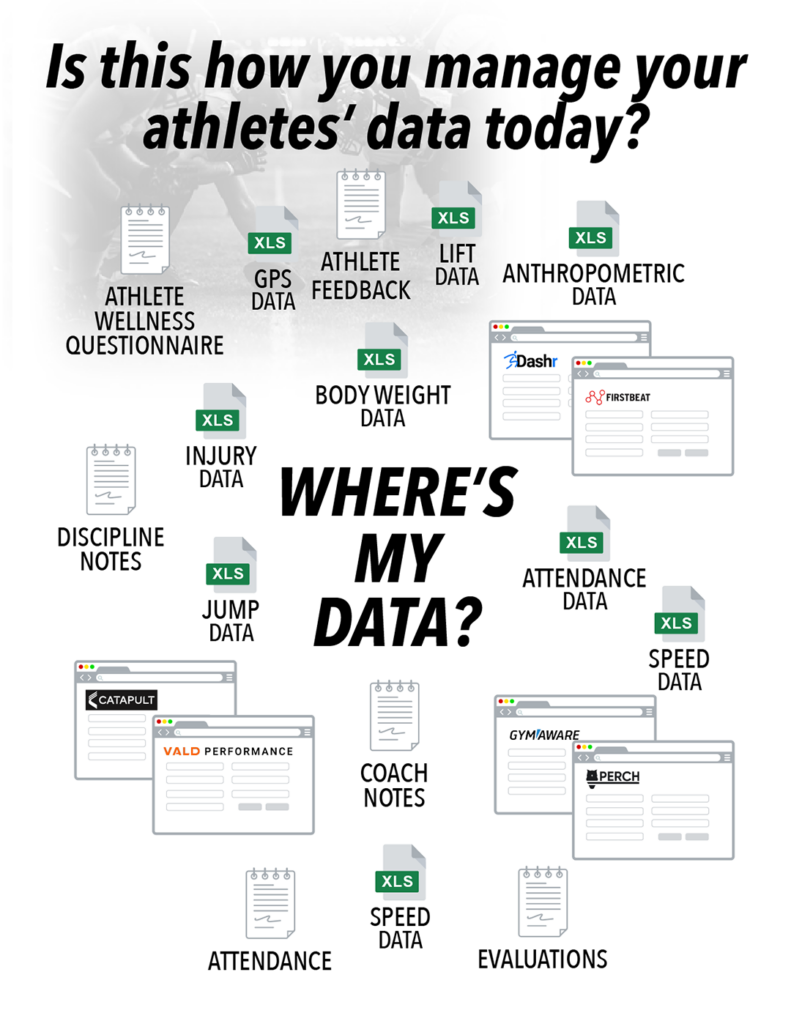
Sports performance staffs now collect data from force plates, GPS and athlete tracking systems, velocity-based training devices, timing systems, jump testing equipment, strength platforms, wellness tools, attendance systems, and other sources.
Each system may be valuable on its own. The challenge begins when each becomes another place a coach has to go for information.
If understanding one athlete requires several logins, spreadsheet exports, testing-date comparisons, and manually combined reports, the problem isn’t a lack of athlete data. It’s turning that data into useful information.
When You Probably Don’t Need an Athlete Management System
Not every sports program needs athlete management software. If you’re using one or two systems, working with a manageable number of athletes, and your staff can quickly answer the questions that matter, your current process may be perfectly adequate.
There’s nothing wrong with Excel if Excel is doing the job, or with going directly into your force plate, GPS, timing, or strength platform when that’s where the information you need already lives.
An Athlete Management System shouldn’t be something you purchase because other programs have one. It should solve a real problem for your staff.
When Does an Athlete Management System Make Sense?
An AMS becomes more valuable as the number of athletes, coaches, teams, and technology systems grows. Strength data may live in one platform, speed data in another, force plate results somewhere else, and GPS, attendance, or wellness information in still other systems.
Now consider a simple coaching question: How is this athlete progressing?
The answer probably exists somewhere in the data. Finding it may be the difficult part. If answering that question requires opening multiple applications and manually combining information, an AMS can help centralize those sources and make the data easier to understand.
What Should an Athlete Management System Do?
A good Athlete Management System should simplify your existing workflow, not become another system your staff has to manage. It should help centralize performance data, connect multiple sports technology systems, track progress over time, compare athletes and groups, and make reporting easier.
Most importantly, it should reduce the amount of time coaches spend managing data and make it easier to answer the questions that affect training and performance.
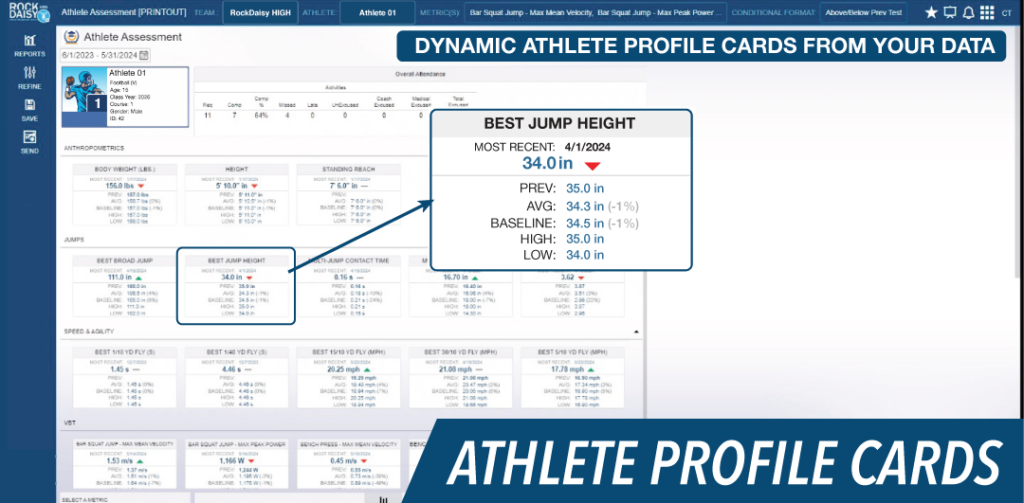
Athlete management system profile combining performance, attendance and testing data
One Platform Doesn’t Have to Replace Every System
An Athlete Management System doesn’t have to replace the technology you’re already using. Your force plates can continue collecting force plate data. Your GPS system can continue tracking workloads. Your timing system can continue measuring speed, and your VBT devices can continue collecting velocity data.
The role of the AMS is to bring those different sources together so coaches don’t have to visit multiple platforms to understand one athlete.
At RockDaisy, that’s a major part of how we approach athlete management: One platform. One login.
Your existing technology continues collecting the data. RockDaisy helps centralize, report on, and make sense of it.
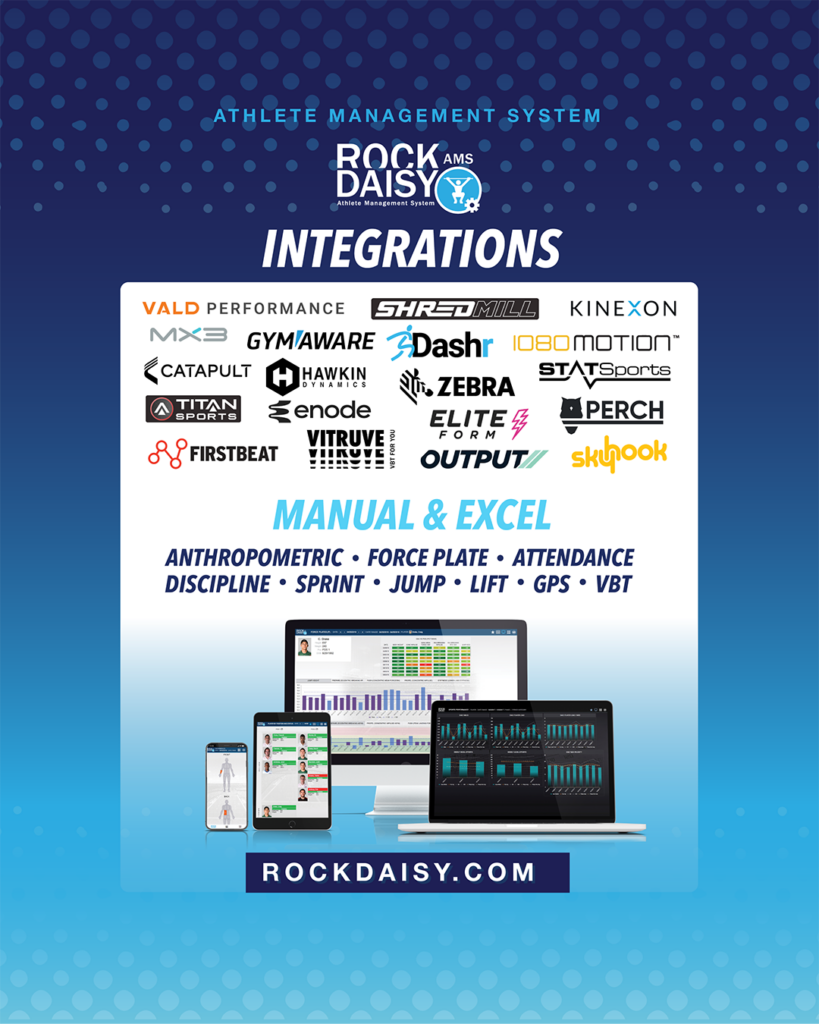
RockDaisy Athlete Management System integrations for sports performance technology and athlete data
An AMS Should Help Coaches Answer Questions
Centralizing data is useful, but putting everything in one database isn’t enough. The real value comes from helping coaches quickly answer questions such as:
- Who is improving?
- Who is trending in the wrong direction?
- Who just set a personal record?
- How does an athlete compare with the rest of the team?
- Is the training program producing measurable results?
- Who may need a coach’s attention?
If answering those questions still requires hours of building reports and digging through dashboards, the data isn’t helping as much as it could.
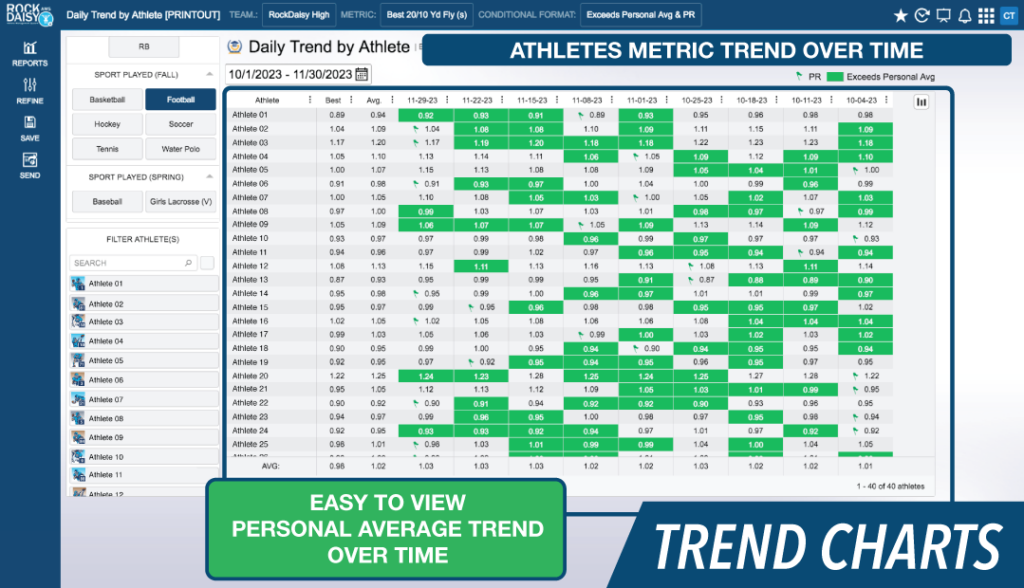
Athlete performance trend report showing testing results over time
From Athlete Data to Athlete Insights
Athlete Management Systems are also beginning to evolve beyond centralizing and reporting data. The next step is helping coaches understand what the data is telling them.
With RockDaisy IQ, performance data already centralized in RockDaisy can be analyzed to surface athlete trends, personal records, improvements, program impact, and athletes who may warrant additional attention.
Instead of requiring coaches to continually search through dashboards, important insights can be surfaced automatically. Coaches can also ask questions of their athlete data without having to build another report.
We surface the insights. You coach the athlete.

RockDaisy IQ dashboard showing athlete performance trends and athletes needing attention
So, Do You Really Need an Athlete Management System?
Maybe not.
If your current systems are simple, your athlete data is easy to manage, and your coaches can quickly get the information they need, keep doing what works.
But if your staff is spending more and more time logging into different platforms, exporting spreadsheets, combining data, creating reports, and searching for answers, an Athlete Management System may be worth considering.
The goal isn’t to add another piece of sports technology. It’s to make the technology and athlete data you already have more useful.
Less time managing data. More time coaching.
About RockDaisy LLC
Founded in 2014 by the developers of the NFL’s analytics services, RockDaisy is a New York-based analytics and data visualization platform serving a growing number of sports organizations across the NFL, NBA, NHL, NCAA, NAHL, NHSSCA, and other elite leagues worldwide. For more information, visit rockdaisy.com | X: @RockDaisyAMS | Instagram: @RockDaisyAMS
visit rockdaisy.com | X: @RockDaisyAMS Instagram: @RockDaisyAMS