In a busy weight room, a few seconds here and a minute there can add up quickly. Athletes finish at different times, rest periods start to drift, and coaches can find themselves spending more time managing the clock than coaching. A visible workout timer can help bring structure to the room, keep athletes moving, and make training sessions more efficient.
Rest periods, work periods, transitions, and rotations may seem like small parts of a workout, but when you are training a large group of athletes, they can have a major impact on how smoothly a session runs.
A workout timer gives coaches and athletes a shared reference point for what is happening now and what comes next – while allowing the coach to keep more attention where it belongs: coaching athletes.
How a Workout Timer Improves Weight Room Efficiency
In a team setting, athletes rarely finish every set at exactly the same time. One rack may be ready to move on while another group is still changing plates, talking, or waiting for someone to tell them what is next.
Over the course of a workout, those small delays can disrupt the flow of an entire session. A visible weight room timer gives everyone the same reference point. Athletes can see how much time remains in a work or rest period and know when they need to be ready for the next set or transition.
Instead of constantly asking, “How much time do we have?”, athletes already know.
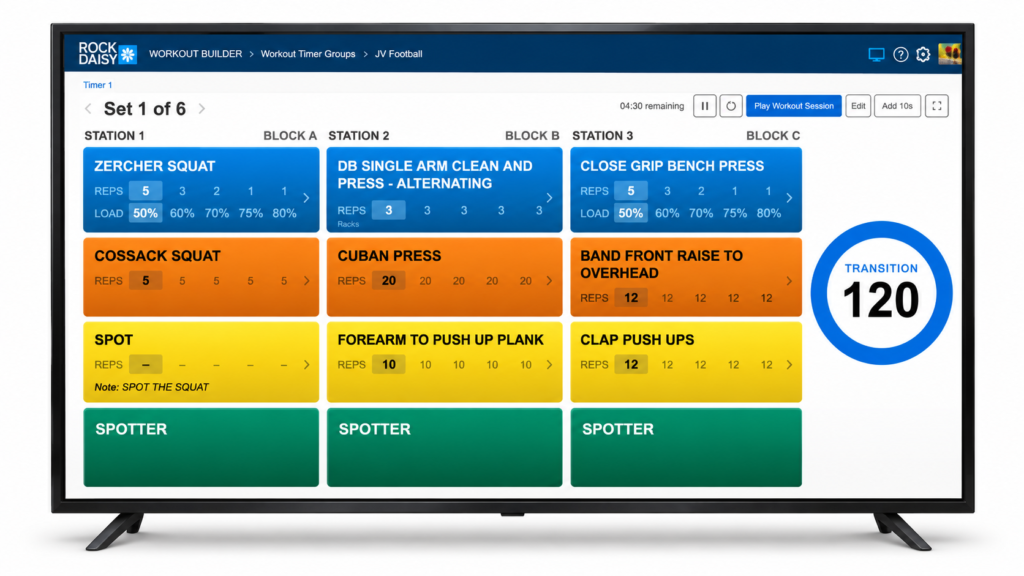
Workout timer displaying multiple training stations in a weight room.
Using a Workout Timer for Consistent Rest Periods
Rest is part of the training program. Whether the goal is strength, power, conditioning, or another training quality, coaches often design workouts with specific rest periods in mind.
In a busy weight room, however, those rest periods can quickly become inconsistent. Thirty seconds turns into a minute. Two minutes turns into four.
Using a workout timer makes the intended rest period visible to everyone and helps athletes stay closer to the structure of the program. The coach still controls the workout. The timer simply makes it easier to execute the plan consistently across a large group.
Make Workout Transitions More Efficient
The time between exercises can be one of the easiest places to lose valuable minutes. Athletes may need to move to another rack, change equipment, load a bar, or prepare for the next exercise.
Without a clear transition period, some athletes move immediately while others take their time. A timer creates a clear expectation. When athletes know they have a defined amount of time to make the transition, they can prepare accordingly.
Over the course of a training session, more efficient transitions can help keep the entire workout on schedule. That becomes especially important for strength and conditioning programs working with multiple groups throughout the day.
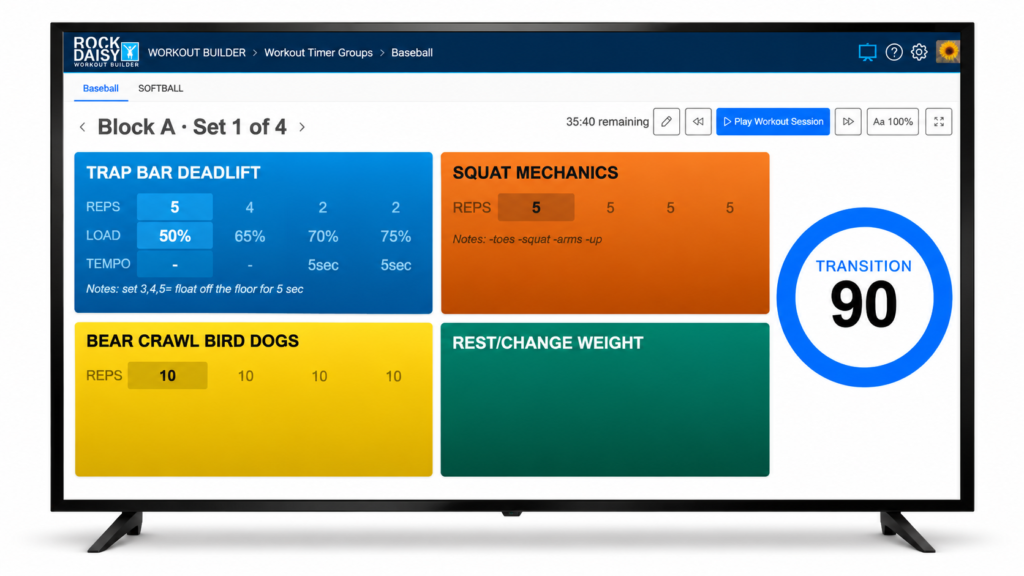
Workout Builder Timer displaying exercises and a 90-second transition.
Give Athletes More Ownership
A workout timer does not only help coaches manage the room. It can also help athletes manage themselves.
When the clock is visible, athletes do not need to rely on a coach to announce every rest period or tell them when it is time to get ready. They can see the time remaining and prepare for what is next.
That creates an environment where athletes have more responsibility for staying on schedule while the coach remains in control of the overall session.
Help Coaches Manage Large Training Groups
Managing five athletes is different from managing 50. The larger the group, the harder it becomes for one coach to personally manage every rack, transition, and rest period.
A workout timer provides a common reference point for the entire room. Instead of repeatedly calling out the time or answering questions about when the next set begins, coaches can focus their attention on things that require their expertise: technique, effort, load selection, athlete feedback, and safety.
The timer handles the clock. The coach handles the coaching.
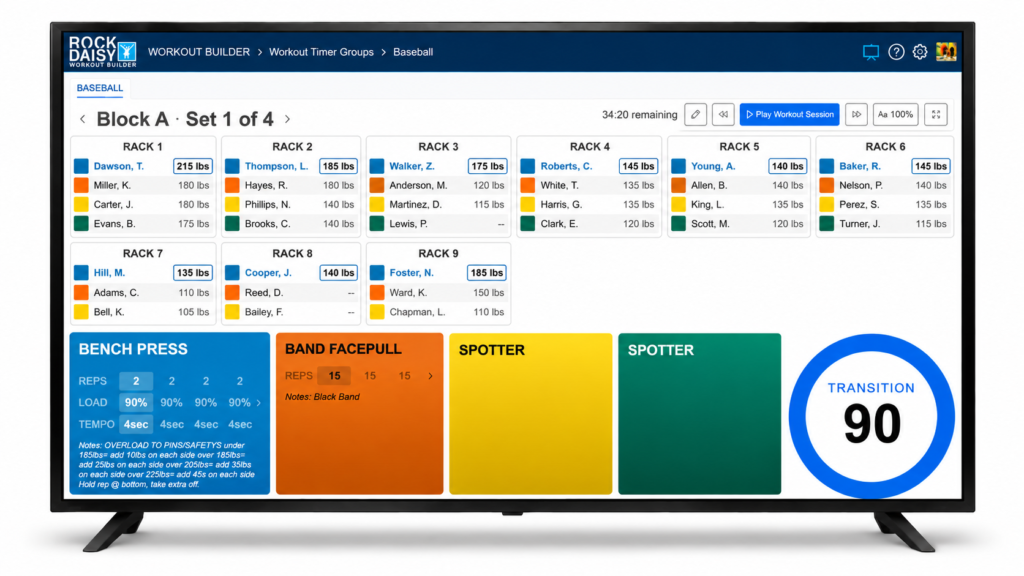
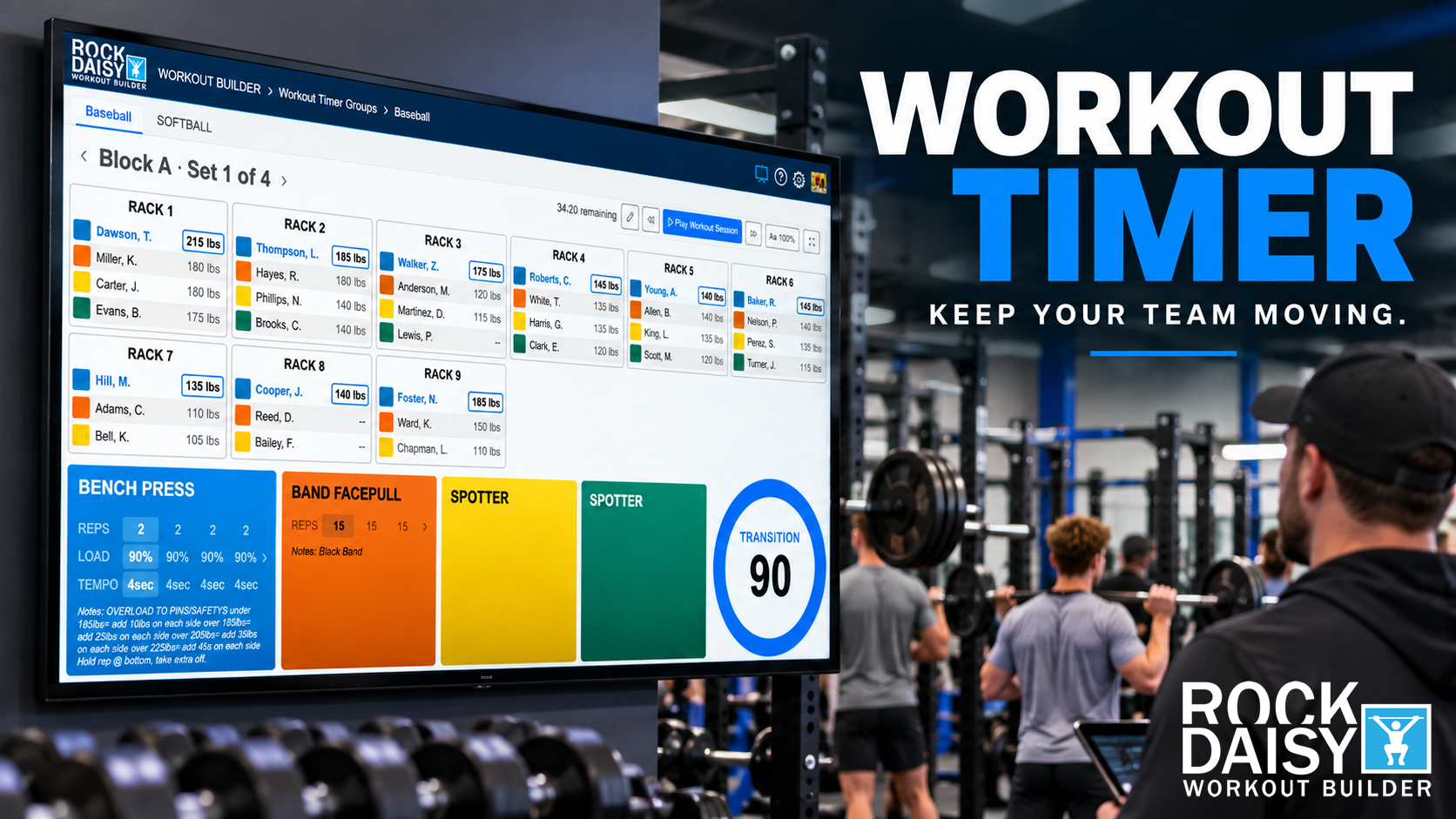
Weight room timer with athlete rack assignments and workout prescriptions.
Small Weight Room Efficiencies Add Up
Saving 20 or 30 seconds during one transition might not sound significant. But multiply that across several exercises, multiple groups, and hundreds of training sessions over the course of a year.
The goal is not necessarily to make every workout shorter. It is to make the time athletes and coaches have together more productive.
A better-organized weight room can mean less unnecessary downtime, smoother rotations, and more time spent actually training.
Bringing a Workout Timer Into the Workout
A workout timer is most useful when it is simple enough that it does not become another piece of technology the coach has to manage.
That is why we built Workout Builder Timer directly into RockDaisy Workout Builder. Coaches can use it to help manage sets, rest periods, and transitions while athletes have a clear visual reference for what is happening in the room.
It is another tool designed around the same goal as Workout Builder itself: making it easier to build, organize, and deliver training to athletes without adding unnecessary complexity.
Because coaches already have enough to manage.
MANAGE THE ROOM. NOT THE CLOCK
About RockDaisy LLC
Founded in 2014 by the developers of the NFL’s analytics services, RockDaisy is a New York-based analytics and data visualization platform serving a growing number of sports organizations across the NFL, NBA, NHL, NCAA, NAHL, NHSSCA, and other elite leagues worldwide. For more information, visit rockdaisy.com | X: @RockDaisyAMS | Instagram: @RockDaisyAMS
visit rockdaisy.com | X: @RockDaisyAMS Instagram: @RockDaisyAMS